The Winners of Startups by the Sea & the Potential of an Ecosystem
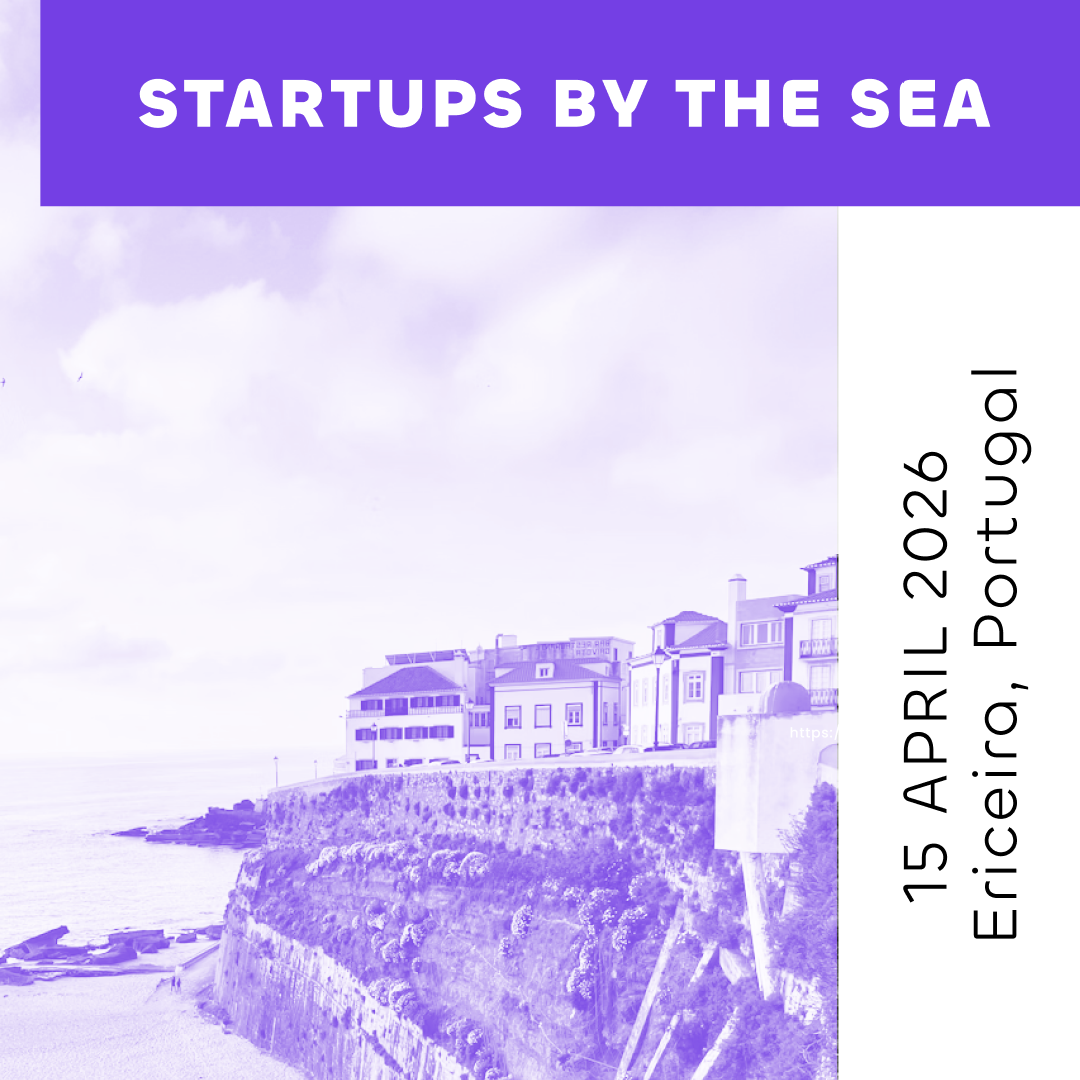
On the evening of Wednesday, the 15th of April, ten companies pitched to a room of founders, investors, operators, and locals on the edge of the Atlantic.
What follows is our account of who won and why, along with our reflections on the potential for Ericeira to become a powerful and unique hub for a certain kind of entrepreneurship.
The Overall Winning Pitch
Some ventures matter because they make life more efficient. Others matter because they restore something deeply human. UpSpeech, the winner of the night’s event, is such a company. This startup, founded and led by Rodrigo Figueiredo, builds AI infrastructure for speech therapy. At the intersection of AI and human well-being, they came first amid a field of impressive competitors.

Speech therapy today remains highly dependent on the weekly in-person session with a therapist. For many patients, especially those dealing with persistent developmental stuttering, the real battle is fought in the long hours between appointments: practicing alone, without feedback, structure, or visible progress.
The result is a care model where therapists are overloaded, patients are undersupported, and clinics cannot scale without adding more clinician hours. UpSpeech’s core insight is powerful, namely that the future of speech therapy is not fully automated care, but AI-powered hybrid care: continuous, measurable, and deeply integrated into the therapeutic process.
The UpSpeech solution transforms the invisible space between sessions into structured practice. Patients receive personalized exercises, real-time AI feedback, and progress visualization. Therapists receive richer data, clearer patterns, and better tools to guide treatment asynchronously. Using UpSpeech, clinics can improve patient outcomes while reducing the cost per unit of success…so to speak.
In a medical area where progress can be slow, subjective, and emotionally demanding, making improvement visible is no minor feat. It is central to motivation, adherence, and confidence.
This is where AI becomes truly useful, not as a gimmick, not as a buzzword, but as a therapeutic infrastructure. It listens, measures, organizes, and feeds insight back into the clinical relationship. It helps the therapist see what happens outside the room.
It helps the patient practice with more confidence. It helps the clinic move from a purely synchronous model to one where care continues beyond the appointment. And it helps enrich the in-person sessions because the therapist understands better where the patient is struggling.
That shift matters.
Healthcare, education, and therapy all suffer from the same structural constraint: expert time is scarce. The old answer was to ration or dilute access. The new answer must be to extend expertise without cheapening it. Done well, AI can make high-quality care more continuous, more affordable, and more accountable. It can turn episodic intervention into a living feedback loop.
More than 80 million people globally are affected by persistent developmental stuttering, while the broader speech therapy services market is projected to reach €16 billion by 2030. UpSpeech estimates a serviceable available market of approximately €3.2 billion across fluency, articulation, and language intervention.
Portugal alone offers a focused launch market with around 3,200 therapists, while Spain expands that base to more than 13,000 therapists. Brazil, with an estimated 45,000–50,000 therapists, represents a natural medium-term expansion market, giving UpSpeech a potential 15–20x expansion path from its Portuguese base. This is a sensible wedge strategy: start narrow, prove the model locally, then expand across languages, disorders, and geographies.
The company has already moved beyond the concept stage. UpSpeech has onboarded 12 speech-language pathologists and 20 patients, with its first clinical pilot in Portugal underway since March.

UpSpeech is the kind of venture we believe the local ecosystem around Lisbon and Ericeira should build more of: scientifically grounded, technically ambitious, commercially sensible, and morally good.
Phira exists to help companies like this move from promising ideas to durable institutions. We bring capital, contacts, an international perspective, and operating and strategic expertise. Our role is not to decorate the deck. It is to help sharpen the blade.
The Competitive Field on the Night
Ten companies made it to the final in Ericeira. The ideas and founders came from all over the world, but with a solid representation from Portugal. All had ties to the area, and most were building from the greater Lisbon region.

The finalists were selected from close to 90 applications. Not only the number but also the quality of the candidates for Startups by the Sea far exceeded our expectations for a first edition and for the first event of its kind in Ericeira. To us, that reflects an unquenched thirst to build more purpose-driven businesses in the area.

The full list of finalists: UpSpeech, RAILspect, Lola Stories, Atlas Cove, Cinelingo, Simplifyer, Quilha, Savearth, DJ Walk, Wave Cam. You can read more about all of them here: LinkedIn
Honourable mentions
The team at Phira had a tough time choosing the ten finalists. Our evaluation criteria rested on four pillars:

We are certain that many outstanding ideas and founders are to be counted among the 80 applicants who did not make it to the event.
Our honourable mention list is a way to recognise some of those:
Beyond the final ten, there were several ventures in the wider applicant pool that also left a real strong impression on us. BloodFlow, Bora Education, Infraware, Open Harvest, and Telos Care each stood out in different valuable ways, whether through technical ambition, clarity of purpose, or the promise of something meaningful in the making. Although they did not pitch on the night, they are projects we were genuinely pleased to discover, and founders whose work we will follow with interest.
The Crowd and the Ecosystem
The room brought together a wide mix of people: founders at various stages, investors, operators, local business owners, and a broad cross-section of professionals and locals who came out of curiosity, to learn more, and possibly contribute to the rising ecosystem.
The discussions ran past the schedule; people lingered and chatted long after the official closing. Connections were made that went beyond the pitches themselves.
What the evening confirmed is that there is palpable, untapped entrepreneurial energy in and around Ericeira. There is also talent, passion, and credible ideas. What has perhaps been missing is more support — financial and in terms of expertise — and forums to help galvanize those ideas into being.

Therefore, we think Ericeira, and the broader area around it, has the conditions to become something more than a pleasant place to live, surf, and practice yoga (and there’s nothing wrong with any of those!). There is an emerging cluster here — of founders, of operators who have left larger careers to build differently, of investors who are looking beyond just the financial ROI.
Whether Ericeira becomes a recognizable hub for entrepreneurship with a purpose depends partly on the quality of what gets built, and partly on whether people choose to keep showing up for one another and putting in the proverbial hard yards.
On the evidence of Wednesday evening, we are increasingly optimistic on both counts.
What comes next
We are in early conversations with UpSpeech and several of the other finalists. We are also going to follow a handful of the other teams closely as they develop.
If you'd like to stay connected to what we're building at Phira — or hear about the next edition of Startups by the Sea — please sign up to our monthly newsletter. Substack